

Difference between acid-resistant bricks and ordinary bricks
Release time:2025-03-19
Release time:2025-03-19
In modern construction and industry, the choice of brick material is crucial, especially in some special environments, such as chemical plants, laboratories, sewage treatment facilities and other places, ordinary bricks often can not meet the demand. At this point, acid-resistant bricks, as a special functional material, become an irreplaceable choice.
1. Material and production process differences
Ordinary bricks are usually made of clay as the main raw material and fired at high temperature. Its production process is relatively simple and low-cost, and it is suitable for general building walls, floor laying and other scenes. The main component of ordinary brick is silicate, its structure is relatively loose, limited compressive strength, and does not have corrosion resistance.
Acid-resistant bricks, on the other hand, are made of special raw materials and processes, and their main components include quartz, feldspar, clay, and acid-resistant aggregates (e.g., silica, pyroxene, etc.). These raw materials are sintered at high temperatures to form a dense crystalline structure, giving them excellent corrosion resistance. In addition, acid-resistant bricks are manufactured with additives to further enhance their resistance to acid, alkali, and chemical corrosion.
Difference Summary: Ordinary bricks are mainly clay, a loose structure; acid-resistant bricks use special raw materials, have a dense structure, and stronger corrosion resistance.romance properties of polyvinylidene chloride (PVDC) to further enhance the material's durability and adaptability.
In the future, with the application of nanotechnology and surface modification technology, the performance of carbon molecular sieves will be further enhanced. Its application areas will also expand from traditional gas separation to new energy, environmental protection and other emerging fields, providing more solutions for sustainable development.
Conclusion:Carbon molecular sieve is becoming an important material in the field of gas separation by virtue of its green and environmentally friendly characteristics. With the continuous progress of technology, its application prospects in the fields of industry, environmental protection and energy will be broader. In the future, carbon molecular sieve is expected to contribute more to the green transformation and sustainable development of global industry.
2. Differences in performance characteristics
The main function of ordinary bricks is to provide basic building support and isolation. It has moderate compressive strength and can meet the needs of general construction, but it has obvious deficiencies in the following aspects:
Poor corrosion resistance: ordinary bricks are prone to chemical reactions in acidic or alkaline environments, leading to corrosion and chalking of the brick body.
Limited abrasion resistance: ordinary bricks have low surface hardness and are prone to wear and tear after long-term use.
Weak permeability resistance: ordinary bricks have high porosity, liquids and gases are easy to penetrate, affecting the service life.
Acid-resistant bricks were originally designed to cope with harsh chemical environments, so they excel in the following areas:
Strong corrosion resistance: Acid-resistant bricks are able to resist a wide range of acids, alkalis and chemical solvents, and are suitable for use in chemical plants, laboratories and other locations.
High abrasion resistance: acid-resistant bricks with high surface hardness can withstand mechanical friction and impact, extending service life.
Good anti-penetration: the dense structure of the acid-resistant brick is not easy to be liquid or gas penetration, effectively preventing the corrosive medium invasion of the brick body.
Difference summary: ordinary brick performance is single, suitable for general construction; acid-resistant brick with excellent corrosion resistance, wear resistance and anti-penetration properties, suitable for special environments.
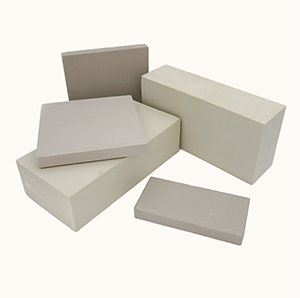
3. Differences in application scenarios
Ordinary bricks are widely used in residential, office buildings, fences, and other civil buildings. Its main function is to provide structural support and space separation to meet basic building needs. However, in acidic, alkaline, or humid environments, the performance of ordinary bricks will be greatly reduced, and may even cause hidden dangers.
Acid-resistant bricks, on the other hand, are mainly used in industrial areas and special environments, for example:
Chemical plants: used to pave floors and walls to prevent acid leaks from damaging the building.
Sewage treatment facilities: used to build pools and trenches to resist the corrosion of chemicals in sewage.
Laboratories: for lab benches and floor coverings to prevent erosion by chemicals.
Food processing plants: used in areas exposed to acids to ensure hygiene and durability.
Difference Summary: Ordinary bricks are suitable for general construction, while acid-resistant bricks are designed for industrial environments and special scenarios.
4. Price and value for money
Ordinary bricks have low production costs and are relatively inexpensive on the market, making them suitable for large-scale use. However, in special environments, ordinary bricks have a shorter service life and may need to be replaced frequently, which in turn increases the long-term cost.
Acid-resistant bricks are more expensive than ordinary bricks because of their complex production process and higher raw material costs. However, in the long run, acid-resistant bricks have a long service life and low maintenance cost, which can save a lot of money for enterprises.
The difference is summarized as follows: ordinary bricks have a low initial cost, but high long-term maintenance costs; acid-resistant bricks have a high initial cost, but are more cost-effective.
5. Environmental protection and sustainability
The production process of ordinary bricks consumes a lot of clay resources, and the firing process may produce a certain amount of environmental pollution. In addition, the waste material produced by ordinary bricks after corrosion is difficult to recycle.
Acid-resistant bricks reduce the frequency of replacement due to their long service life, thus reducing resource consumption. In addition, some of the acid-resistant bricks use industrial waste as raw materials, further enhancing the environmental performance.
Difference Summary: Acid-resistant bricks are more advantageous in terms of environmental protection and sustainability.
Conclusion
There are significant differences between acid-resistant bricks and ordinary bricks in terms of material, performance, and application scenarios. Ordinary bricks are suitable for general construction needs, while acid-resistant bricks are designed to cope with corrosive environments, with greater durability and functionality. When choosing bricks, users should make a reasonable judgment based on the actual needs and use of the environment to ensure the long-term stability of the building and the economy.
RELATED INFORMATION


Customer Service Hotline
Tel/WeChat/WhatsApp: +86 18079994732
E-mail/Zoom: Lynn@pxrjhb.cn
Address: No. 1-269, Zone B, Industrial Park, Xiangdong District, Pingxiang City, Jiangxi Province
 Customer Service
Website construction:300.cn