

The role of ozone catalysts in air purification
Release time:2025-03-28
Release time:2025-03-28
With the acceleration of urbanization, air quality is a growing concern. Among the many air purification technologies, ozone catalysts, with their unique mechanism of action, have become an important means of addressing air pollution. This technology is able to effectively decompose harmful substances in the air through the synergistic action of catalyst and ozone, providing an innovative solution to improve indoor and outdoor air quality.
I. Working principle of ozone catalyst: building a ‘bridge’ for oxidation reaction
Ozone (O₃) itself is a strong oxidizing agent, but its stability is poor and it is easy to decompose at room temperature. The core role of ozone catalysts is to reduce the activation energy of ozone decomposition through the active sites on the surface and accelerate its reaction with harmful substances. For example, metals or metal oxides (e.g., iron, copper, manganese, etc.) in the catalyst can adsorb ozone molecules and make their chemical bonds unstable, which in turn decompose into oxygen (O₂) and reactive oxygen species. These reactive oxygen species are further converted into hydroxyl radicals (・OH), which are highly oxidizing substances that can react with almost all organic substances and decompose them into harmless substances such as carbon dioxide and water.
This catalytic process is highly selective and effective. The catalyst is able to promote the reaction of ozone with specific pollutants in a targeted manner, while avoiding effects on other harmless substances. In this way, ozone catalysts not only improve the efficiency of ozone utilisation, but also degrade harmful gases such as formaldehyde, benzene and TVOC in the air.
II. Multiple applications of ozone catalysts in air purification
Industrial Exhaust Gas Treatment
In industrial production, ozone catalysts can effectively remove nitrogen oxides, volatile organic compounds (VOCs), and other harmful gases. For example, in the exhaust gas treatment of chemical and printing industries, the catalyst can accelerate the reaction between ozone and pollutants and convert them into harmless substances, thus meeting the strict emission standards.
Indoor Air Purification
In homes and offices, ozone catalysts can quickly reduce airborne odours, germs, as well as formaldehyde, benzene and other harmful substances left over from renovations. By integrating the catalyst into air purification equipment, it can continuously decompose pollutants and improve indoor air quality, providing people with a healthier breathing environment.
Air Treatment for Special Scenarios
In places with extremely high air quality requirements, such as hospitals and laboratories, ozone catalysts can be combined with other purification technologies (e.g. ultraviolet light, activated carbon adsorption) to form a synergistic purification system, effectively killing bacteria and viruses and removing odors at the same time.
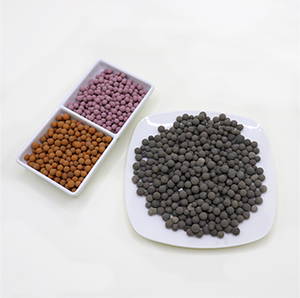
III.Technical Advantages of Ozone Catalysts: Core Support for Sustainable Purification
Enhancement of ozone utilization efficiency
In traditional ozone purification technology, ozone utilization is low and prone to residue. By optimising the reaction path, the ozone catalyst significantly improves the contact efficiency between ozone and pollutants, reduces the waste of ozone, and lowers the operating cost.
Pollutant degradation capacity
The intervention of the catalyst makes ozone decompose to produce more hydroxyl radicals. This strong oxidant is able to break through the limitations of the traditional technology and decompose large organic molecules into small molecules, or even completely mineralise them into carbon dioxide and water, thus removing hazardous substances from the air completely.
Stability and longevity
Modern ozone catalysts use carrier materials such as multi-metal composite fibers, combined with special preparation processes to ensure the mechanical strength and chemical stability of the catalyst. For example, the service life of some catalysts can be up to several years and is not easily affected by humidity, temperature, and other environmental factors, to ensure the long-term stability of the purification effect.
IV, technological innovation to promote the development of the industry
In recent years, ozone catalyst technology has been upgraded. For example, the ozone catalyst developed by Shandong Shenyang Environmental Technology Co., Ltd. takes multi-metal composite fiber as the carrier and ensures that the active components are not easily lost through the even-loading technology, which significantly improves the catalytic efficiency and stability. In addition, some enterprises also combine ozone catalytic technology with photolysis, plasma and other technologies to form a synergistic purification system, which further improves the ability to deal with complex pollutants.
With the rising demand for environmental protection, the application of ozone catalysts in the field of air purification is promising. Through continuous technological innovation, this efficient and sustainable purification technology will provide stronger support for improving air quality and building a green home.
RELATED INFORMATION


Customer Service Hotline
Tel/WeChat/WhatsApp: +86 18079994732
E-mail/Zoom: Lynn@pxrjhb.cn
Address: No. 1-269, Zone B, Industrial Park, Xiangdong District, Pingxiang City, Jiangxi Province
 Customer Service
Website construction:300.cn