

Anti-corrosion principle of acid-resistant bricks
Release time:2025-03-26
Release time:2025-03-26
As an important material in the field of industrial anticorrosion, acid-resistant bricks have been attracting attention for their excellent corrosion resistance. In the chemical, metallurgical, and pharmaceutical industries, acid-resistant bricks are widely used in acid pools, tanks, floors, and other critical areas to provide lasting protection for equipment and buildings. So, why can acid-resistant bricks remain stable in a complex chemical environment? Its anti-corrosion principle mainly stems from the synergistic effect of material properties, microstructure, and production process.
Firstly, the anti-corrosion performance of acid-resistant bricks is closely related to the choice of raw materials. These bricks are usually quartz, feldspar, clay, and other natural minerals as the main raw materials, after high-temperature firing and become. Among them, the main component of quartz is silicon dioxide (SiO₂), the content can be more than 70%. Silicon dioxide itself has excellent chemical stability and, at room temperature can resist a variety of acid and alkali medium erosion. When these raw materials are roasted in a high-temperature kiln, the silica reacts with other mineral components to form a large number of polyaluminium erythrite crystals. This crystal structure not only has high hardness but also has strong acid resistance, which is the core material basis of acid-resistant brick corrosion resistance.
Secondly, the dense structure of acid-resistant bricks is an important guarantee for its anti-corrosion. In the production process, the raw materials are finely ground and evenly mixed, and then formed into a dense internal structure through high-pressure molding and high-temperature sintering. This structure makes the bricks have a very low water absorption rate, usually only 0.5 to 5.0 percent. The low water absorption means that liquid media can hardly penetrate the brick body, thus avoiding continuous erosion of the brick body by chemical substances. Even in environments where they are exposed to acidic or alkaline solutions for long periods, acid-resistant bricks maintain their structural integrity, preventing corrosive media from spreading through the pores and extending the service life of the material.
In addition, the physical properties of acid-resistant bricks support their anti-corrosion capability. These bricks have high compressive strength and abrasion resistance, usually with a compressive strength of more than 100MPa, and can withstand large mechanical stresses and frequent wear and tear. In industrial production, the equipment or floor may be subject to external forces such as material impact, mechanical vibration, etc., and the high strength characteristics of acid-resistant bricks make them not easy to break under these circumstances, thus maintaining the continuity of the anti-corrosion layer. At the same time, the smoothness of its surface or special treatment (such as glazed or plain design) also helps to reduce the adhesion and residue of the medium, which further enhances the anti-corrosion effect.
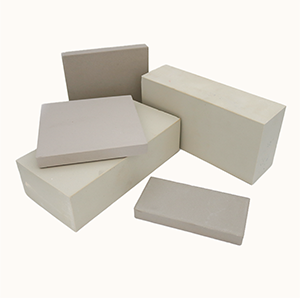
In practice, the anti-corrosion principle of acid-resistant bricks is also reflected in their adaptability to the environment. For example, in the chemical industry, acid-resistant bricks can be used for masonry acid trenches, acid wells, and acid storage reservoirs, and their chemical stability can resist the corrosion of sulfuric acid, hydrochloric acid, nitric acid, and other strong acids. For alkaline environments, acid-resistant bricks can also resist any concentration of lye at room temperature, but their temperature resistance is relatively weak, and they need to avoid direct contact with high-temperature molten lye. This wide range of adaptability to different chemical media makes acid-resistant bricks an ideal choice in the field of industrial corrosion protection.
In summary, the anti-corrosion performance of acid-resistant bricks is the result of the joint action of raw material properties, microstructure, and physical properties. Its chemical composition of silica as the core provides a natural corrosion-resistant foundation, the dense sintered structure prevents the penetration of the medium, while the high strength and low water absorption ensures the long-term stability of the material in harsh environments. As industrial technology continues to develop, the production processes and properties of acid-resistant bricks continue to be optimized to provide reliable protection against corrosion in a wider range of areas. In the future, this economical and practical material will continue to play an important role in industrial protection, helping various industries to achieve their production goals.
RELATED INFORMATION


Customer Service Hotline
Tel/WeChat/WhatsApp: +86 18079994732
E-mail/Zoom: Lynn@pxrjhb.cn
Address: No. 1-269, Zone B, Industrial Park, Xiangdong District, Pingxiang City, Jiangxi Province
 Customer Service
Website construction:300.cn