

Sulphur autotrophic filler production process and technical standards
Release time:2025-03-26
Release time:2025-03-26
As an innovative material in the field of wastewater treatment, the optimisation of the production process and technical standards of sulphur autotrophic filler is of great significance in enhancing the efficacy of deep treatment of wastewater. In recent years, with the increasingly stringent environmental protection requirements, sulfur self-feeding filler has gradually become a hot spot in water treatment technology due to its features such as no additional carbon source, high efficiency of nitrogen and phosphorus removal, and low operating cost.
Innovation and optimization of the production process
The preparation of sulfur autotrophic filler needs to achieve the accurate regulation of material properties through several precision processes. Taking a certain technology as an example, the preparation process usually includes raw material pretreatment, biological activation, mixing and sintering, and other key steps. Firstly, pyrite and sulfur are ground to a specific particle size, and the homogeneity of the raw materials is enhanced through the ball milling process. Subsequently, aerobic bioactivation of the pyrite powder is carried out to promote the modification of the minerals by microorganisms using a specific medium, and then anaerobic activation is used to further optimize the biocompatibility of the materials. The activated minerals need to be acid-washed to remove impurities, then mixed with sodium bicarbonate, activated carbon, and other additives for ball milling, and formed into a porous structure through granulation and low-temperature sintering. This process not only ensures the physical strength of the filler but also provides an ideal attachment environment for microorganisms through the design of the pore structure, which significantly enhances its selectivity.
In another know-how, the preparation of iron sulphide-based composite fillers was carried out by a thermal composite process. Through the high-temperature activation treatment of sulfur iron ore, its electron donor release capacity, and then the activated minerals and molten sulfur, trivalent iron salts, and other components of the uniform mixture, after cooling and curing to form a composite material with effective nitrogen and phosphorus removal function. This process achieves directional regulation of filler performance through precise control of raw material ratios and process parameters, providing a reliable material basis for deep treatment of sewage.
Core elements of technical standards
The technical criteria for sulfur autotrophic fillers cover a wide range of physical properties, chemical composition, and functional characteristics. In terms of physical properties, the filler should have an appropriate particle size distribution (usually 2-6 mm) and porosity (>45%) to ensure good water flow through and microbial attachment space. Compressive strength >4.8Mpa, low wear rate, and other indicators to ensure the stability of the filler in long-term operation, reduce the loss of materials due to mechanical wear.
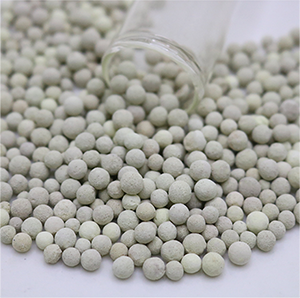
In terms of chemical composition, the content and proportion of sulfur and iron in the filler are the key factors affecting its function. For example, the sulfur content of sulfur-iron based composite filler is usually controlled at 30%-95%, and the addition of iron salt can promote the oxidation reaction of sulfur and enhance the efficiency of nitrogen removal. At the same time, the filler needs to contain a certain proportion of porous carrier materials (such as activated carbon), in order to its adsorption capacity and microbial film efficiency.
In terms of functional characteristics, the sulfur autotrophic filler needs to meet the actual needs of deep treatment of sewage. For example, in the denitrification performance, it is required to be able to treat sewage with influent total nitrogen (TN) ≤15mg/L to TN ≤5mg/L, nitrate nitrogen <1mg/L. At the same time, the bio-selectivity of the filler needs to be ensured to promote the growth of sulfur autotrophic microorganisms directionally to avoid over-propagation of other stray bacteria, and to maintain a stable treatment efficacy. In addition, the synchronicity of nitrogen and phosphorus removal of the filler is also an important criterion, through the oxidation of sulfur and iron dissolution synergistic effect, to achieve the effective removal of nitrogen and phosphorus.
Application Advantages and Industry Prospects
The popularisation and application of sulfur autotrophic packing have brought significant technological innovation to the sewage treatment industry. Compared with the traditional heterotrophic denitrification process, it does not need to add an organic carbon source, which can reduce the cost of chemicals by about 60%, and at the same time, reduce the sludge production, and reduce the burden of subsequent treatment. In actual projects, sulfur autotrophic packing has been successfully applied to domestic wastewater, industrial wastewater, and other scenarios, through the optimization of process parameters (such as empty bed residence time of 20-25 minutes, filtration rate of 5.3-6.6m/h), to achieve stable treatment results.
With the continuous development of environmental protection technology, the production process and technical standards of sulfur autotrophic filler will continue to be optimized. In the future, through the in-depth integration of material science and biotechnology, it is expected to further improve the performance stability and environmental adaptability of the filler, and provide stronger support for the low-carbon and more efficient global sewage treatment.
RELATED INFORMATION


Customer Service Hotline
Tel/WeChat/WhatsApp: +86 18079994732
E-mail/Zoom: Lynn@pxrjhb.cn
Address: No. 1-269, Zone B, Industrial Park, Xiangdong District, Pingxiang City, Jiangxi Province
 Customer Service
Website construction:300.cn