

Honeycomb Inclined Tube Packing Specification and Selection Guide
Release time:2025-03-27
Release time:2025-03-27
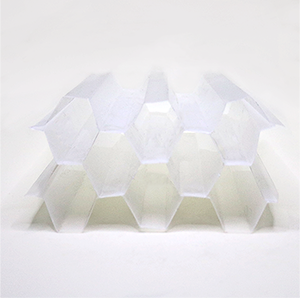
In the field of water treatment, honeycomb inclined tube packing, as an effective precipitation and separation equipment, is widely used in water purification, sewage treatment, industrial wastewater treatment and other scenarios. The reasonable selection of its specifications directly affects the treatment effect and cost-effectiveness.
First, the core parameters of the specifications
The specification of honeycomb inclined tube packing is mainly determined by the material, aperture, thickness, and assembly form.
Material selection
Filler materials usually include polypropylene (PP), polyvinyl chloride (PVC), and fiberglass-reinforced plastic (FRP). PP material has the characteristics of light weight, good corrosion resistance, and low cost, which is suitable for most of the conventional water treatment scenarios; PVC material is stronger and more resistant to chemical corrosion, but a little less flexible; FRP material has excellent high temperature and high-pressure resistance, which is suitable for the treatment of high turbidity or oily wastewater.
Aperture and thickness
The aperture of packing is one of the key parameters, common specifications are Φ25mm, Φ35mm, Φ50mm, and Φ80mm, the smaller the aperture, the larger the specific surface area per unit volume, the higher the sedimentation efficiency, but may also increase the risk of clogging. As for the thickness, the common range is from 0.4mm to 0.8mm, the greater the thickness, the greater the structural stability of the filler, and the longer the service life, suitable for high load or complex water quality environments.
Assembling form
Fillers are divided into two forms: inclined pipe and straight pipe. The inclined pipe is mainly used for sedimentation and desanding, using the principle of ‘shallow sedimentation’, shortening the settling distance of particles through the inclined pipe design to improve the treatment efficiency; straight pipe is mostly used in a biofilter to provide carriers for microorganisms and promote biochemical reactions.
Second, the key considerations for selection
When selecting a model, it is necessary to consider the characteristics of water quality, treatment needs and costs, and other factors, the following specific guidelines:
Selection of pore size according to the type of water quality
Drinking water treatment: if the water source is groundwater, the water quality is cleaner, you can prefer Φ25mm or Φ35mm small aperture filler to improve the sedimentation efficiency; if the water source is river water and other water bodies containing more impurities, it is recommended to use Φ35mm or Φ50mm filler to ensure the efficiency of the water body and reduce the risk of clogging at the same time.
Domestic wastewater treatment: the suspended particles in domestic wastewater are large, it is advisable to choose Φ50mm or Φ80mm large aperture filler, which can effectively retain impurities and reduce the probability of clogging to ensure long-term stable operation.
Industrial wastewater treatment: such as coal chemical industry, petroleum wastewater, etc., the water quality is complex and the impurity particles are large, it is necessary to choose Φ80mm large aperture packing, with FRP and other high-strength materials, to withstand the impact of high loads, to extend the service life. In addition, FRP material is not easy to hang oil on the surface, which is suitable for the treatment of oily wastewater.
Selection of material in combination with treatment scenarios
PP material is preferred for conventional water treatment, which is cost-effective and has balanced comprehensive performance;
If the wastewater has strong corrosive or high-temperature characteristics, FRP material is more reliable, although the cost is higher, but can ensure the long-term stable operation of the equipment;
PVC material is suitable for the scene with certain requirements for strength but low corrosiveness, which should be weighed according to the specific water quality.
Other considerations
The angle of inclination of the packing material is usually designed at 60° to optimize the sedimentation effect, and it is necessary to check the supplier's process standard when selecting the model;
Transport and installation cost is also one of the factors to consider, field assembly of filler can reduce the difficulty of transport, but need to reserve enough time for construction.
Third, the summary
The selection of honeycomb inclined tube packing should be based on the characteristics of water quality, combined with the treatment objectives and cost budget, scientific selection of materials, aperture, and thickness. Reasonable selection can not only enhance the sedimentation efficiency, and reduce maintenance costs, but also extend the service life of the equipment, laying a solid foundation for the operation of water treatment projects. In practical application, it is recommended to work closely with professional suppliers to develop personalized solutions according to the specific working conditions, to achieve good treatment results and economic benefits.
RELATED INFORMATION


Customer Service Hotline
Tel/WeChat/WhatsApp: +86 18079994732
E-mail/Zoom: Lynn@pxrjhb.cn
Address: No. 1-269, Zone B, Industrial Park, Xiangdong District, Pingxiang City, Jiangxi Province
 Customer Service
Website construction:300.cn