

Principle of anti-slabbing technology for high-temperature sintered iron-carbon fillers
Release time:2025-03-28
Release time:2025-03-28
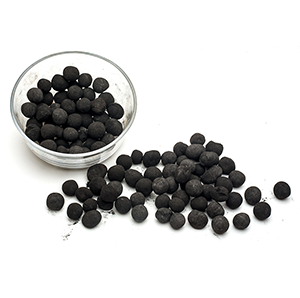
In metallurgy, chemical industry, and environmental protection fields, iron-carbon packing is widely used in wastewater treatment, metallurgical reduction, and other processes due to its excellent catalytic performance and cost advantage. However, in the high-temperature sintering process, the iron-carbon filler is prone to slate phenomenon, resulting in a decrease in porosity and activity, affecting its long-term stability. In recent years, researchers have significantly improved the anti-sintering performance of iron-carbon fillers by optimizing the material ratio, improving the sintering process, and introducing new additives.
Causes of iron-carbon packing sintering
The sintering of iron-carbon filler mainly originates from the sintering of iron particles and the structural change of the carbon matrix under a high-temperature environment. Under the high-temperature condition above 800℃, the surface of iron particles melts, and the metallurgical bond between particles is formed through diffusion, which leads to the hardening of the filler. At the same time, the carbon matrix may be graphitized or oxidized at high temperatures, further exacerbating the structural densification. In addition, the presence of low melting point impurities (e.g. sulfur, phosphorus, etc.) in the filler can promote the formation of a liquid phase, accelerating the agglomeration process.
Key principles of anti-slumping technology
1. Optimise the ratio of iron to carbon and particle size distribution
The anti-caking performance of iron-carbon filler is closely related to its composition. Appropriately reducing the iron content (e.g. controlling in the range of 30%-50%) can reduce the probability of contact between iron particles, thus inhibiting sintering. At the same time, the use of iron and carbon powders with multistage particle size ratios can form a more stable skeleton structure and reduce volume shrinkage at high temperatures. For example, coarse-grained iron powder provides support, while fine-grained carbon powder fills pores and retards densification.
2. Introduction of high-temperature stabilizers
Adding a small amount of high melting point oxides (e.g. aluminum oxide, magnesium oxide) or carbides (e.g. silicon carbide) to the iron-carbon filler can effectively inhibit the migration and agglomeration of iron particles. These additives remain solid at high temperatures and are distributed between iron particles to provide physical isolation. In addition, oxides of certain rare earth elements (e.g., lanthanum, cerium) can alter the diffusion kinetics on the iron surface and reduce the sintering rate.
3. Control of sintering atmosphere and temperature increase rate
The atmosphere during the sintering process has a significant effect on the sintering behavior. In a reducing atmosphere (e.g. hydrogen or carbon monoxide), the surface of the iron particles is less susceptible to oxidation, but may still be softened by over-reduction. In contrast, in an inert atmosphere (e.g., nitrogen or argon), iron sintering can be balanced with carbon stability by precisely controlling the oxygen partial pressure. In addition, a gradient heating strategy (e.g., low-temperature degreasing followed by high-temperature sintering) can reduce the structural damage caused by thermal stress.
4. Surface modification and pore structure design
By pretreating the surface of iron particles (e.g., phosphoric acid passivation or silane coupling agent coating), the surface energy at high temperatures can be reduced and sintering can be delayed. At the same time, reserving part of the open pore structure in the filler (e.g., adding the pore-making agent ammonium carbonate) can form through pores after sintering and maintain high permeability and active surface area.
Practical application effect
An industrial test showed that the compressive strength of iron and carbon filler with composite additives (alumina + silicon carbide) increased by only 15% after sintering at 1000°C for 4 hours, while the untreated control group rose by more than 60%. In addition, the porosity of the modified filler was maintained at around 40%, which was significantly better than the 25% of the conventional formulation. In wastewater treatment, the rate of decay of the catalytic activity of these anti-caking fillers was reduced by about 50%, and the service life was extended to 1.5 times the original.
Conclusion
The anti-sintering technology of high-temperature sintered iron-carbon fillers effectively solves the stability problem of traditional fillers by regulating the material composition and process parameters from multiple angles. In the future, with the advancement of nano-modification and computer simulation technology, the performance optimization of iron-carbon fillers will be more accurate, providing more reliable solutions for industrial applications.
RELATED INFORMATION


Customer Service Hotline
Tel/WeChat/WhatsApp: +86 18079994732
E-mail/Zoom: Lynn@pxrjhb.cn
Address: No. 1-269, Zone B, Industrial Park, Xiangdong District, Pingxiang City, Jiangxi Province
 Customer Service
Website construction:300.cn